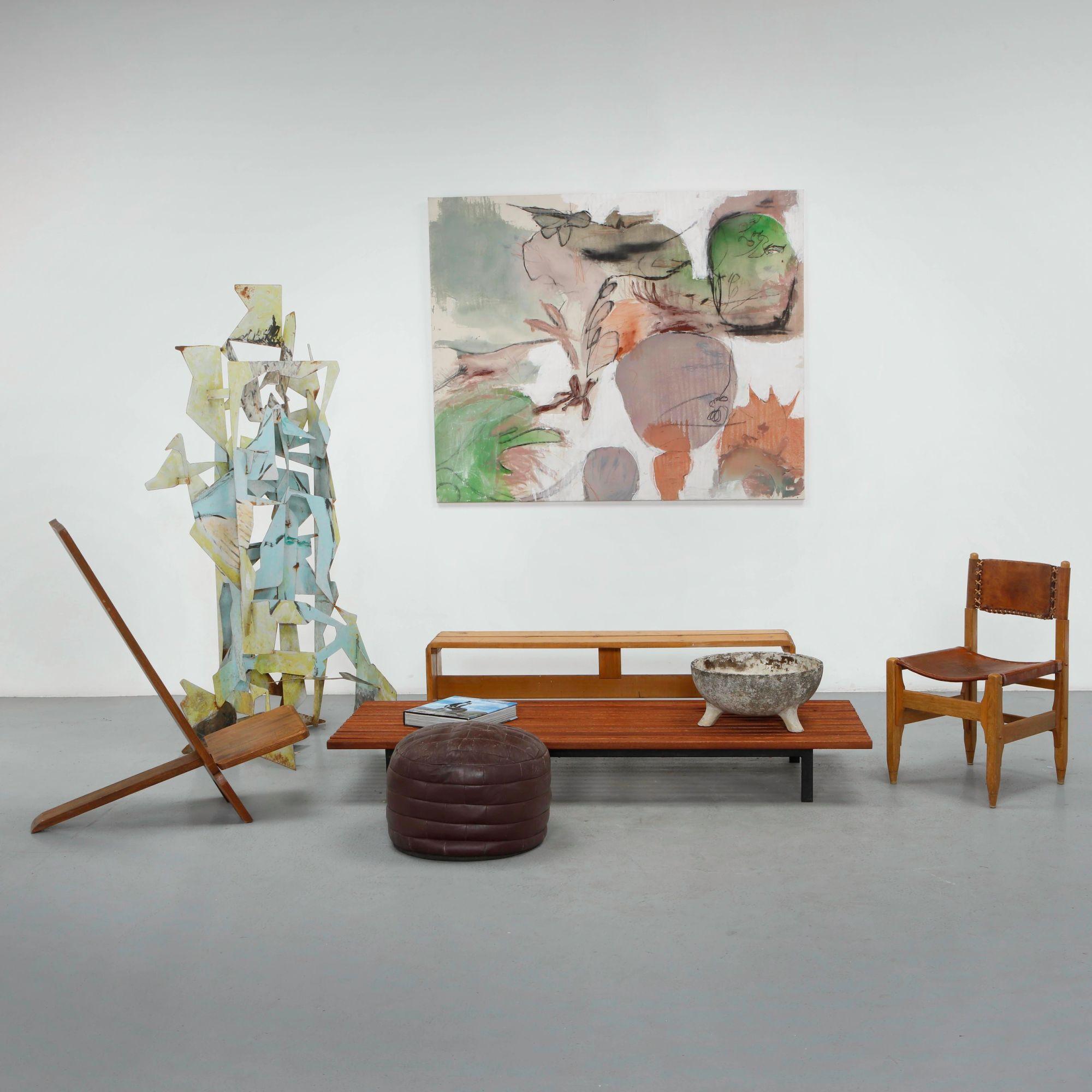
Oak, pine, rope, perforated steel and ceramic were developed for a climate and a way of living that Los Angeles happens to share.
Circa sources most of its inventory in France, so the French bias in the catalog has a logistical explanation. But it has held for a reason that is not logistical: the furniture works here. Postwar French modernism was designed for houses that open outward, for hard floors, for strong light and for rooms that are used rather than staged. That is a description of a lot of Los Angeles.
Materials that were chosen for a climate
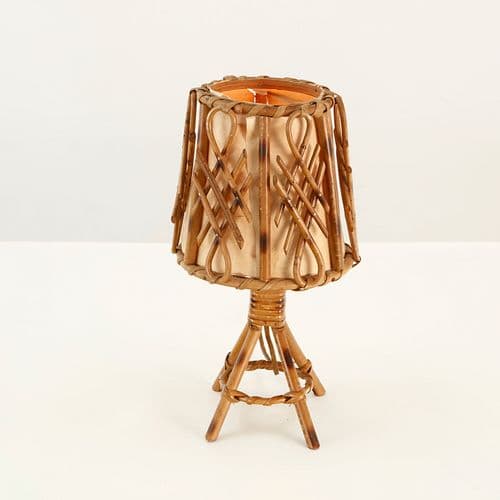
The palette is consistent across designers who otherwise have nothing in common. Oak and pine left close to raw. Rope and rush seats. Rattan. Wrought and perforated steel. Glazed ceramic. Every one of those materials is chosen for durability in dry heat and for tolerance of ultraviolet light, and every one of them looks better slightly worn.
The contrast is with the veneered, lacquered and heavily upholstered furniture of the same decades from elsewhere in Europe, which was designed for smaller, darker, colder rooms. A high-gloss dark cabinet in a room with three exposures reflects the whole garden back at you. A dry oak sideboard does not.
The Reconstruction argument
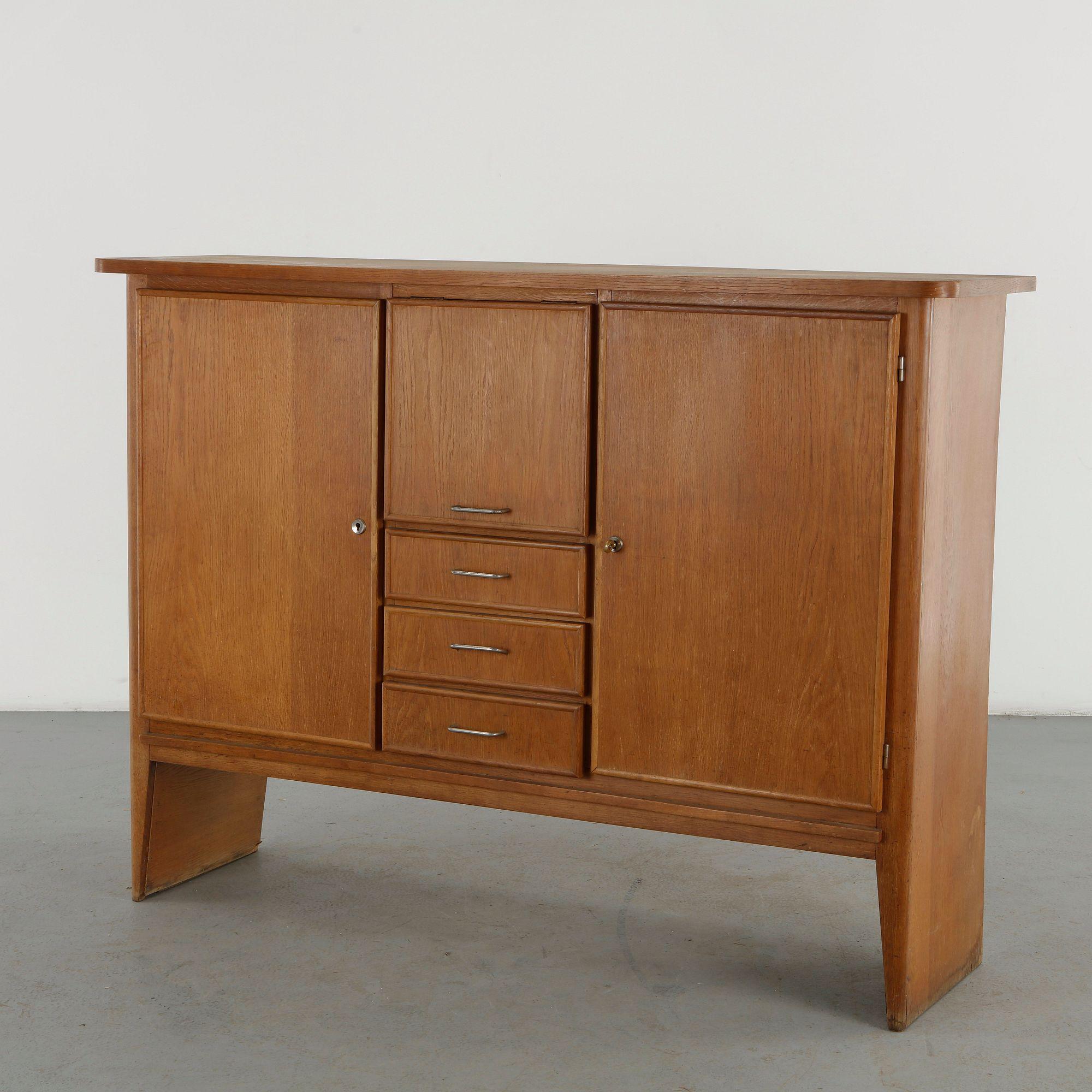
There is also a design ethos underneath it. René Gabriel's RG202 sideboard in this sale was designed in 1946, in the middle of the French Reconstruction, when the brief was robust, economical, functional furniture made in quantity for people who had lost everything. Charlotte Perriand's Les Arcs work from 1967 onward was contract furniture for apartments, not for collectors. Maison Regain built with elm and rope for everyday use.
None of it was made to be precious. That is exactly why it survives a household with dogs, children and open doors.
What that looks like in the current sale
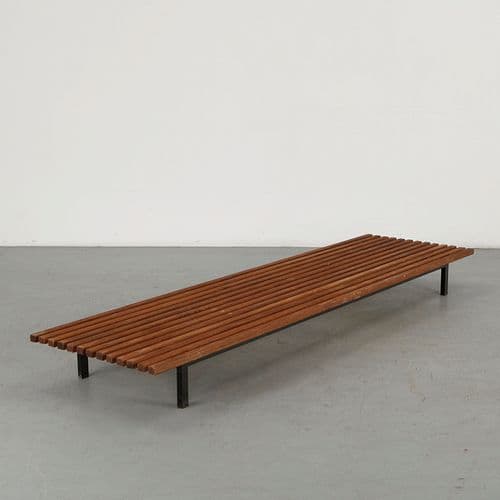
- Lot 116, the Charlotte Perriand long Cansado bench for Steph Simon, designed in 1958 for a mining town in Mauritania and built for a hot climate.
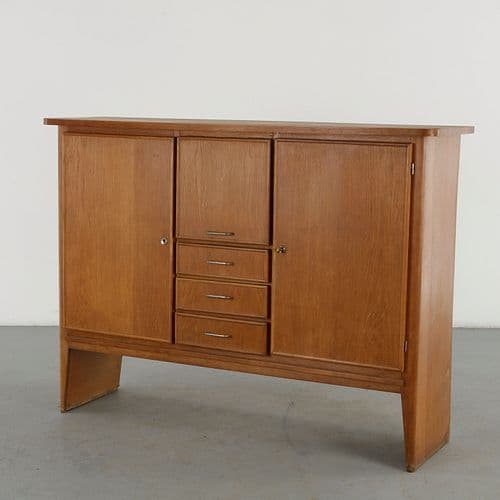
- Lot 165, the René Gabriel RG202 oak sideboard, 69 inches of Reconstruction-era storage with cast aluminum pulls.
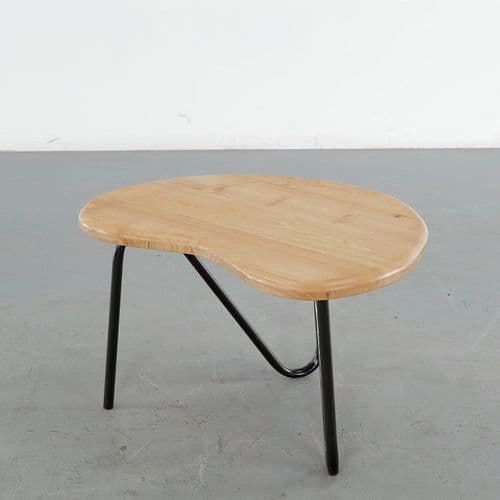
- Lot 265, the Pierre Guariche Prefacto table, a biomorphic oak top on bent lacquered legs.
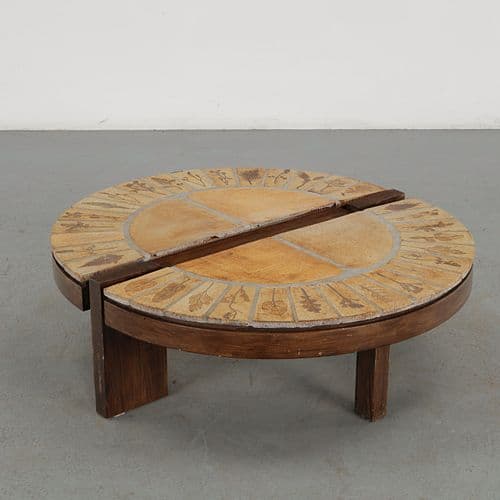
- Lot 111, a Roger Capron oval ceramic coffee table, a top that is indifferent to sun and water.
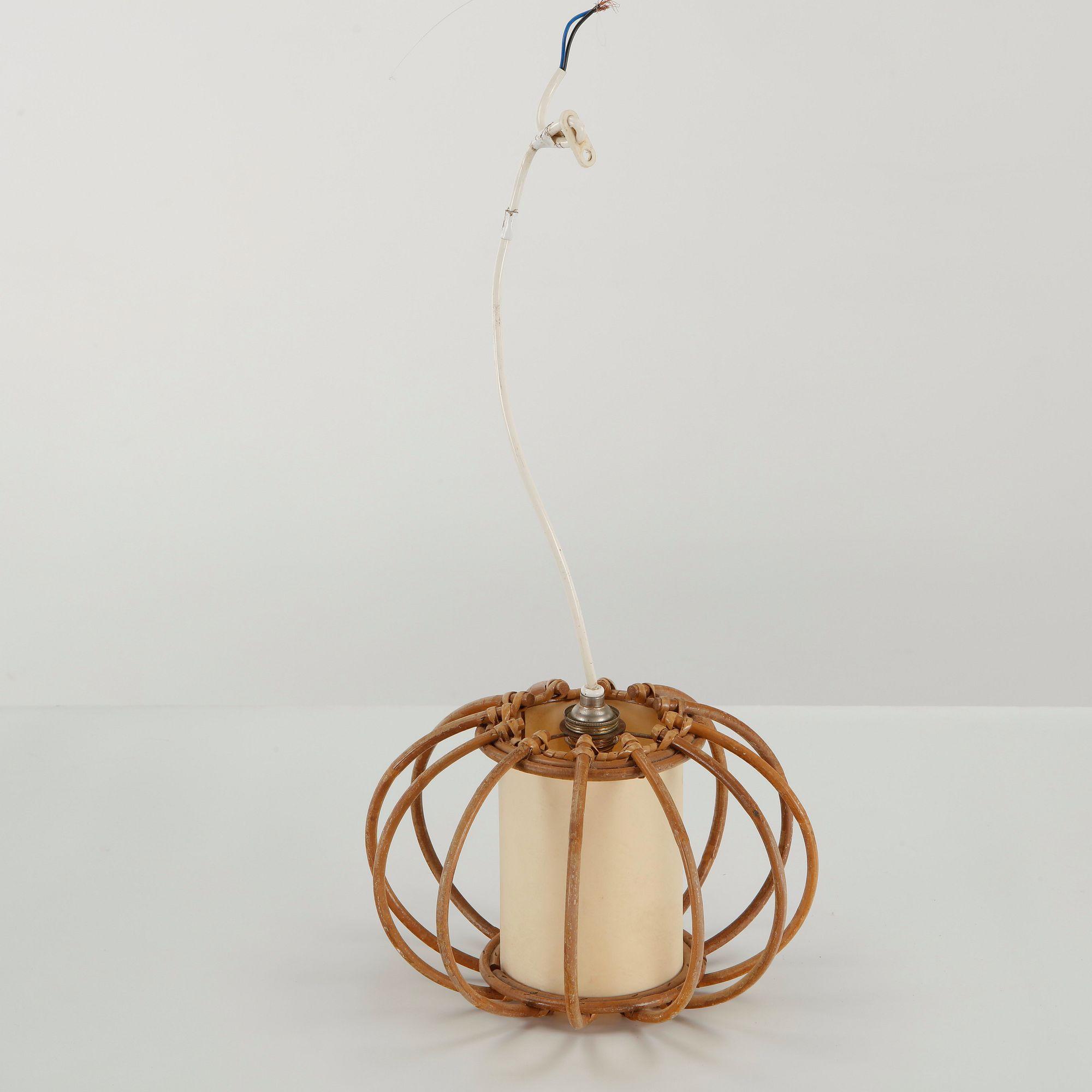
- Lot 86, a Louis Sognot rattan lantern pendant, weave and textile rather than glass and metal.
- Lot 345, a Maison Regain elm sideboard, 79.5 inches, solid throughout.
- Lot 103, a Pierre Gauthier-Delaye set of four Weekend chairs with woven rope seats.
- Lot 227, a pair of Jacques Adnet iron and leather armchairs, the one piece of formality in the group.
How to combine it here
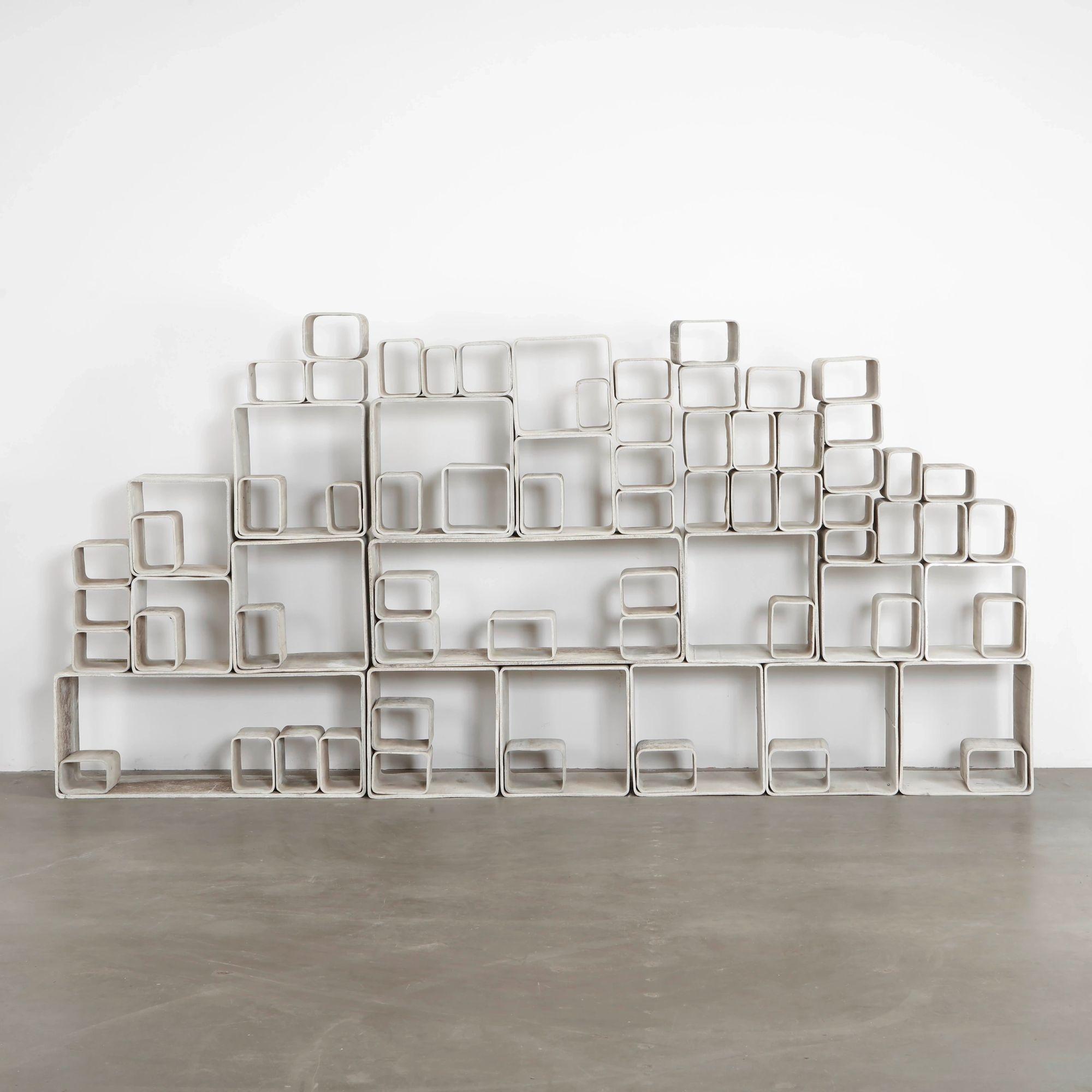
The mistake is to build a French room. The furniture was never homogeneous in France and it does not want to be homogeneous here. It sits well against American postwar seating, against Danish teak, and particularly against the concrete and cast stone that fills the garden half of a Circa sale, because the raw grey of a Guhl planter and the raw grey of unfinished oak are closer than they look in photographs.
The second rule is to keep the floor visible. Rope, rattan and thin steel frames all depend on seeing through and under them. Put a French rope chair on a large rug and it becomes a wooden chair.
The French Modernism collection on this site runs against the live catalog and will show every lot that qualifies in the current sale. Preview is at 249 South Mission Road.