Circa's condition language for garden lots is deliberately blunt. Here is what it means, what it does not mean, and where the real problems hide.
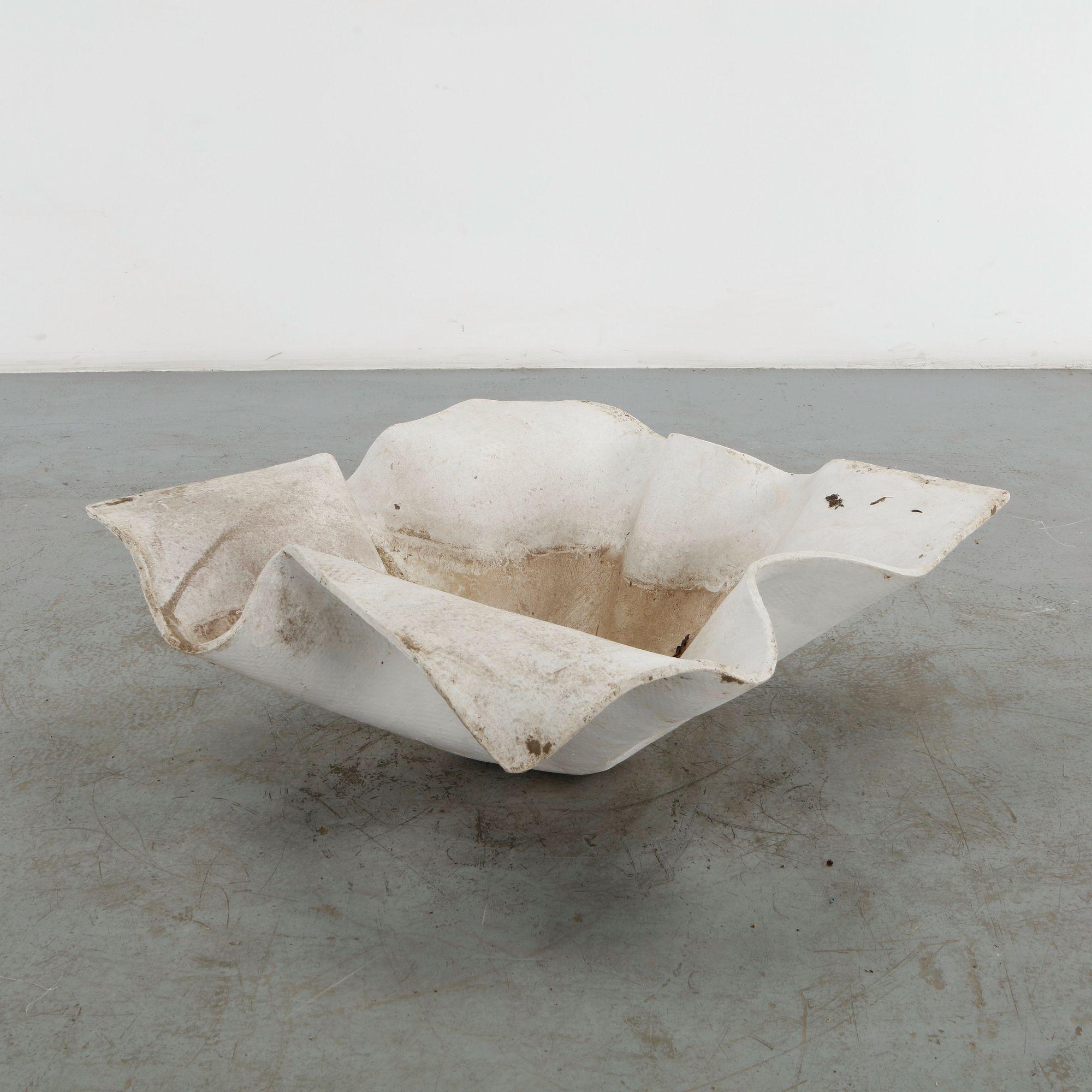
185 of the 349 lots in Escape to the Modernist Garden carry the same opening line in their condition report. It is worth quoting exactly, because it is the sentence buyers ask about most.
Wear commensurate with age and evidence of outdoor use. Outdoor pieces vary with patina, discoloration and minor imperfections.
Circa condition report, garden lots
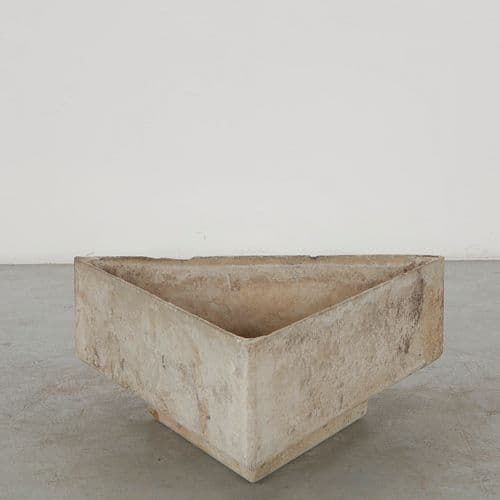
That is not a hedge. It is a description of the category. A 1960s concrete planter that spent sixty years in a French garden and shows nothing is either a reproduction or has been resurfaced, and both of those are worse outcomes than moss.
What patina actually is
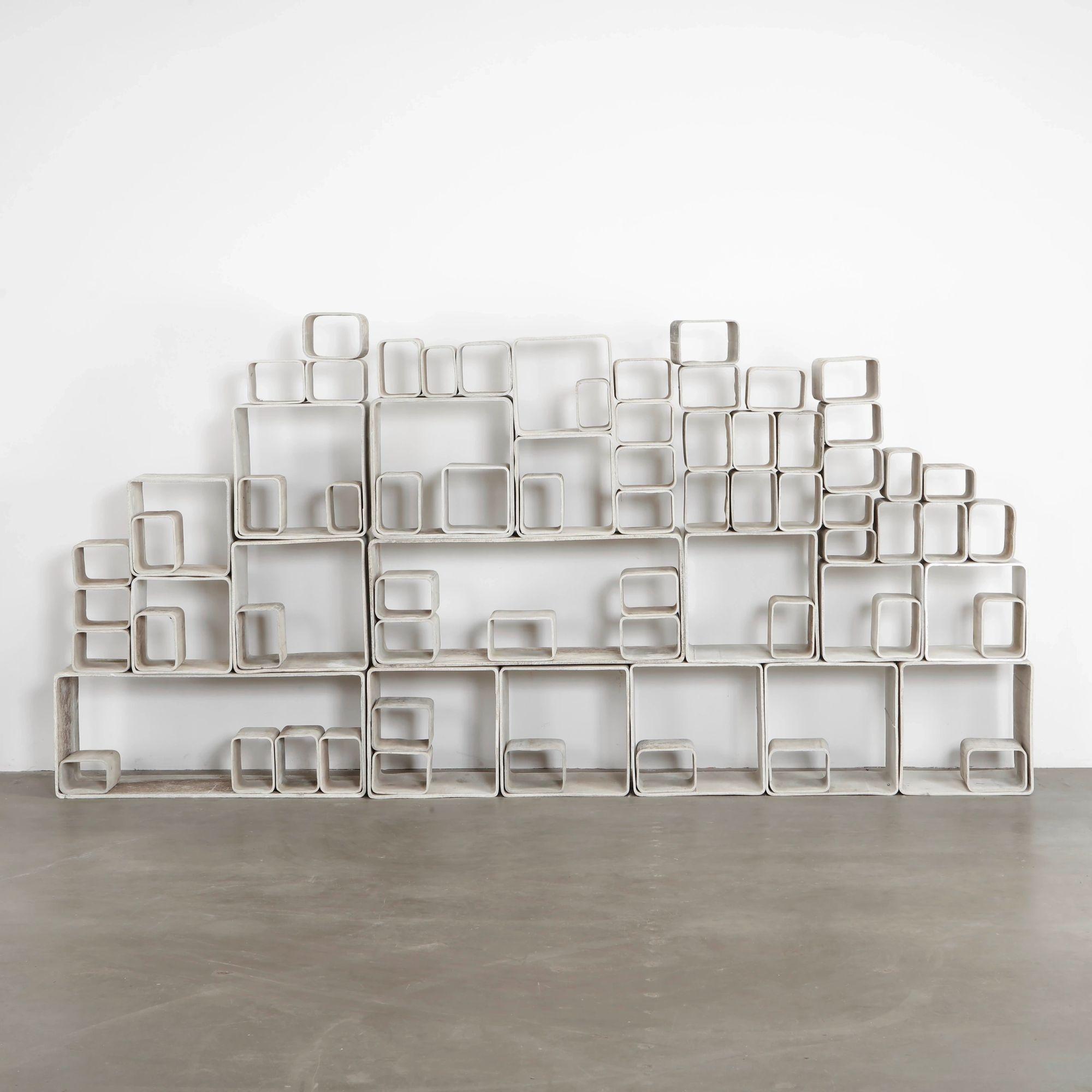
On concrete and fiber cement it is a combination of three things: biological growth, mineral deposit and surface erosion. Lichen and moss colonise the porous surface and darken it unevenly. Calcium and iron leach through and leave pale bloom or rust staining. Rain and grit take the sharp arris off an edge and expose the aggregate underneath. All three are stable, all three are reversible only by removing material, and all three are the reason the object looks the way it does.
On painted iron, patina is layered paint loss and stable oxide. Lot 223, an EMU garden table, is catalogued with a finish that reveals successive layers of colour and corrosion, and that stratigraphy is the point of the piece.
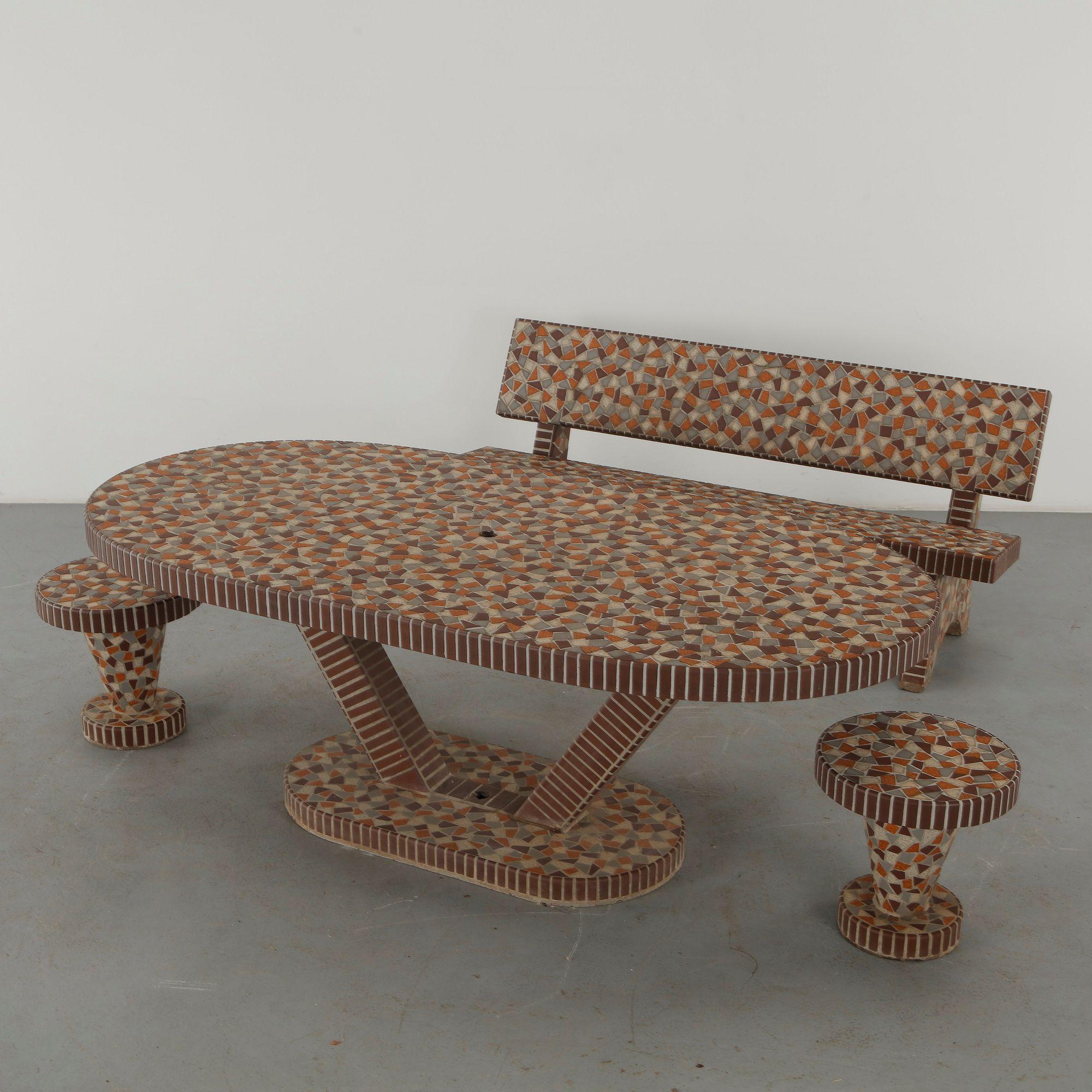
On mosaic and tile, patina is the grout, not the tesserae. Glaze survives outdoors almost indefinitely. The cement between the pieces does not.
What is not patina
- A crack that crosses a rim and continues into the body. Surface crazing stops at the surface. A structural crack changes the outline of the object.
- Missing tesserae in a load-bearing area of a mosaic top, as opposed to losses at a decorative edge.
- Delamination on fiber cement, where a layer is lifting rather than eroding. It will keep lifting.
- A base that has been re-cast or a stand that does not belong to the bowl it carries. Ask for a photograph of the join.
- Fresh paint over old corrosion on iron. Sealing rust in does not stop it.
How to ask about condition
Circa's condition statements are given as a courtesy and are an opinion rather than a statement of fact, which is standard auction language and is printed on every lot. The useful response to that is not to distrust it but to ask specific questions, because specific questions get specific answers.
- Ask for a raking-light photograph of the rim and the base rather than a general image.
- Ask whether a crack is through the section or in the surface only.
- Ask whether a pedestal and basin are original to each other.
- Ask about the drainage. Factory-drilled holes on a Guhl planter are original; a drilled hole with a fresh edge is not.
Living with it
Do not pressure wash. It strips the top layer of cement and leaves a surface that is both brighter and rougher than the one you bought. Brush off loose growth with a stiff dry brush, rinse with water, and leave it. If a piece will hold water through a freeze, drain it, though in Los Angeles that is rarely the issue. Never cut, sand or drill vintage fiber cement; the original material contained asbestos and it was reformulated only in the late 1990s.
The rest is a matter of taste. The patina on these lots took sixty years to arrive and cannot be reproduced. It is most of what you are buying.