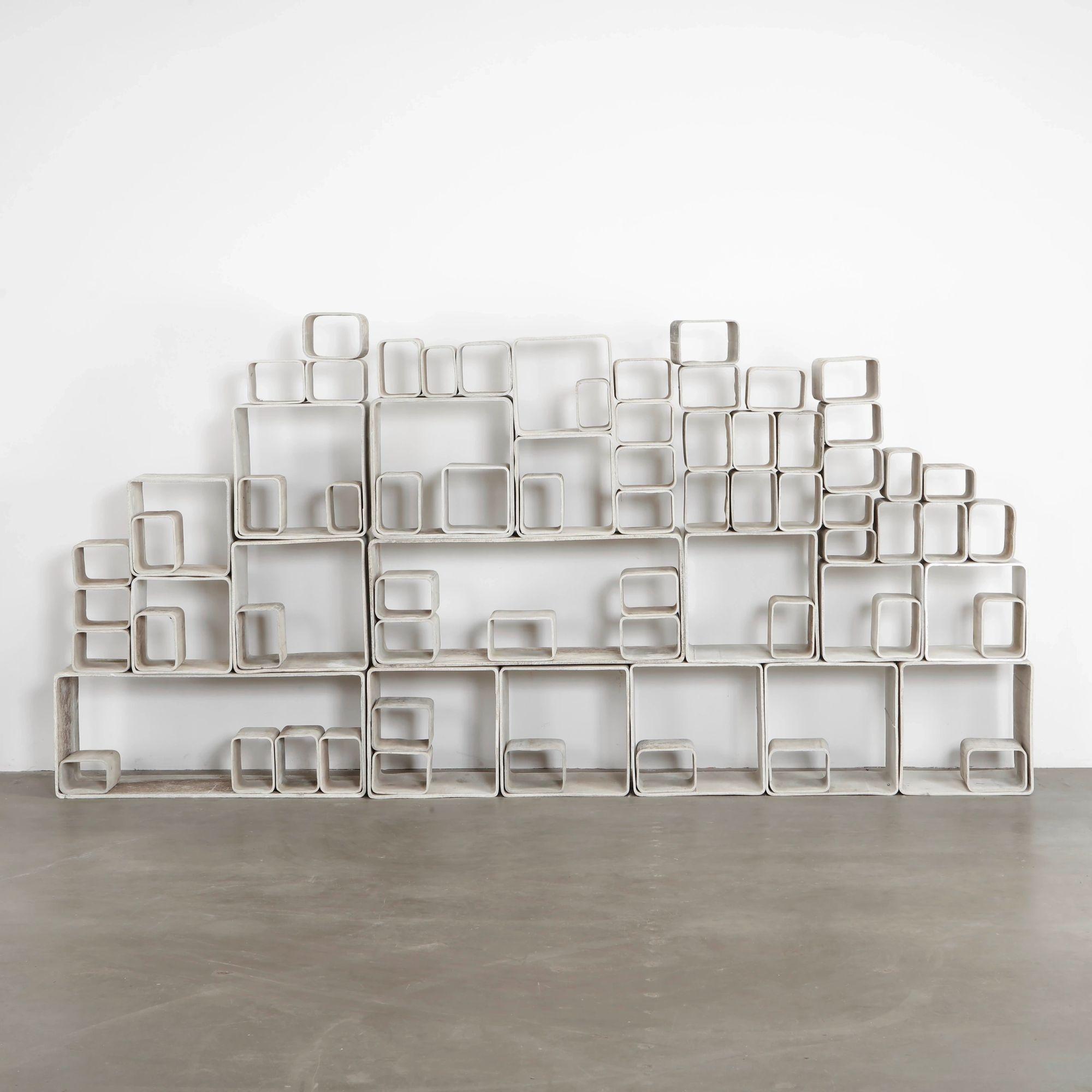
Fiber cement was a roofing product until a Zurich teacher draped a wet sheet of it over a wooden mould. Seventy years later his planters are the spine of every Circa garden sale.
Escape to the Modernist Garden catalogs 349 lots, and more of them carry Willy Guhl's name than any other designer's. That concentration is not an accident of supply. It follows from a single material decision made in Switzerland in the early 1950s, and understanding it changes how you read the pieces on the floor.
A teacher, a factory and a flat sheet
Guhl was born in Stein am Rhein in 1915 and trained as a cabinetmaker before joining the School of Applied Arts in Zurich, now the Zurich University of the Arts, where he taught for most of his working life. In 1951 the Swiss firm Eternit contacted the school. Eternit pressed fiber cement into flat sheets for roofing and cladding and wanted to know what else the material could do. Guhl and his students answered with garden objects.
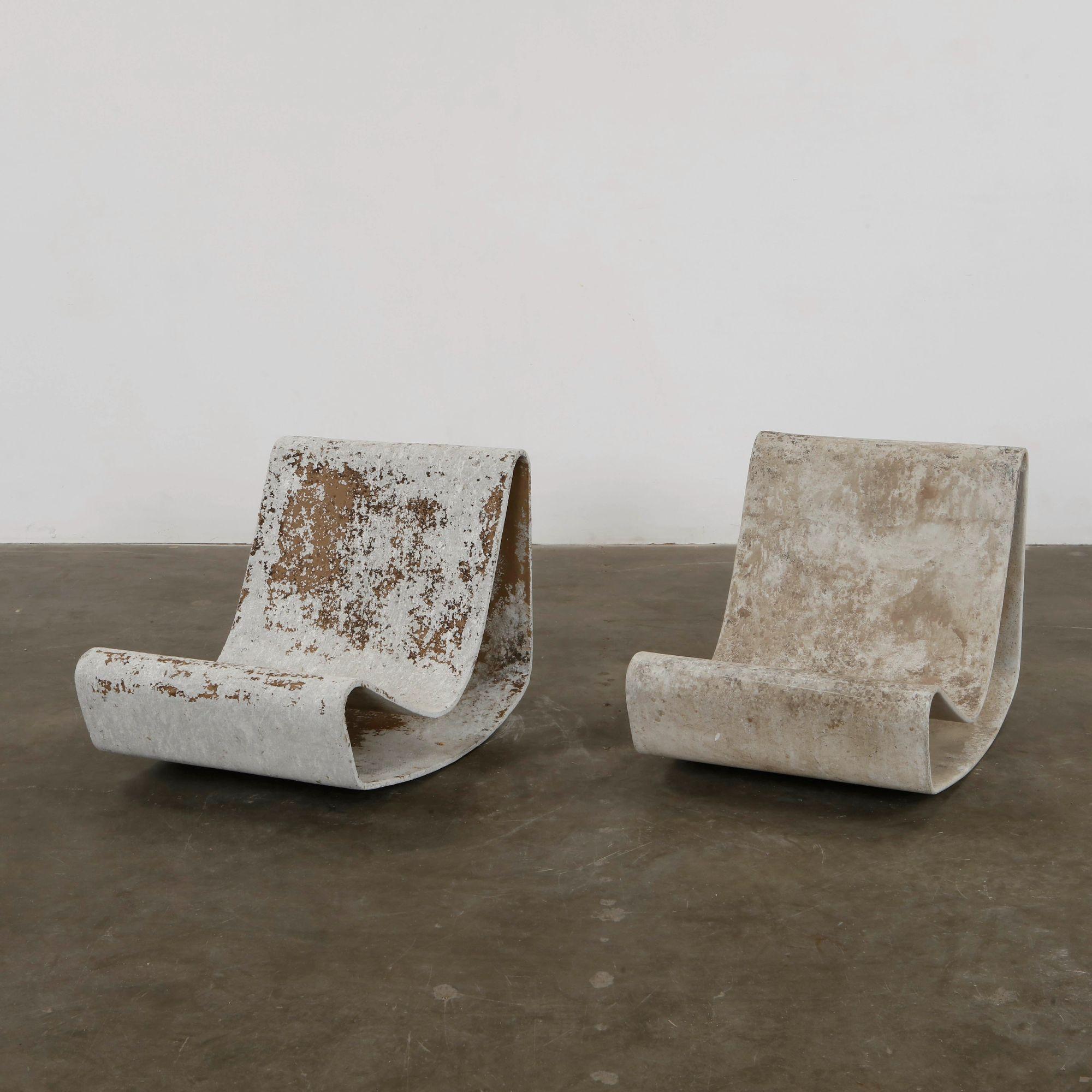
The method was as plain as the result. A sheet of fiber cement, still wet, was laid over a wooden mould and left to cure. The sheet kept the record of how it had been folded. That is the reason a Guhl planter reads as fabric that hardened rather than as something poured into a box. The handkerchief planter, now universally called the elephant ear, came out of that first round of experiments. In 1954 Guhl applied the same logic to seating: the Loop chair is one sheet of fiber cement bent into a continuous ribbon that carries a sitter with no frame underneath it.
The material was industrial, the process was almost domestic, and the result was sculpture that could be left outdoors for fifty years.
Reading the forms
Circa catalogs the shapes by their trade names, and the vocabulary is worth learning because it is how the market prices them.
- Elephant ear, also sold as handkerchief. A square sheet draped over a rounded mould so the corners lift. Wide, shallow, best planted low.
- Diabolo. Two cones meeting at a narrow waist. The small and extra small versions are the scarcest and the most sought after.
- Conical planter on stand. A tapered cone lifted on a separate concrete or metal foot, which is what gives it presence in a bed.
- Bowl on pedestal. A broad shallow basin on a heavy base, often the largest object in a Guhl group and usually the anchor of a terrace.
- Off-kilter and freeform. Deliberately asymmetric bodies where the mould was tilted. These read as sculpture first and container second.
- Cauldron, jar and urn. Closed, rounded volumes with a narrowed opening, the closest Guhl gets to a traditional garden pot.
What to check before you bid
Factory-drilled drainage holes are a good sign: they indicate the piece left Eternit as a planter rather than being converted later. Weight is the second thing to plan for. A monumental bowl planter is a two-person lift at minimum, and the pedestal usually separates from the basin, so measure both. Surface crazing and moss are normal and are described in the condition note; a crack that runs through the rim and into the body is not, and is worth asking about before the sale.
One practical caution. Fiber cement of this period contained asbestos, which is why it was fire resistant and why Eternit reformulated the material in the late 1990s. Intact vintage pieces are handled and sold routinely, but they should never be cut, drilled, sanded or broken up. If a planter needs a drainage hole, it does not need this one.
Where the market sits
Guhl is unusual in being both a museum designer and an accessible one. In The Provencal Modernist on 29 August 2026 a twisted planter made $2,000 and a monumental bowl planter on a concrete stand made $1,700, while smaller round and square planters settled between $300 and $600. The spread is a function of scale and rarity of form, not of condition. Buyers who want the name at the lowest entry point look for single round or square planters; buyers building a terrace look for pairs, because Guhl objects are almost always better in twos.